
- All
- Product Name
- Product Keyword
- Product Model
- Product Summary
- Product Description
- Multi Field Search
 English

 |


| Quantity: | |
|---|---|
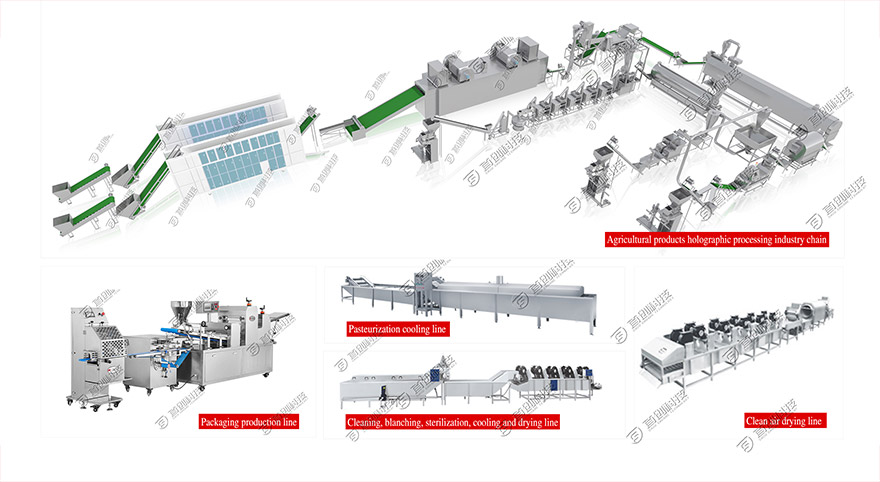
The core task of a coffee bean drying production line is to safely dry high-moisture green beans (after pulping and demucilaging) to a stable moisture content suitable for long-term storage and roasting, while avoiding high temperatures that damage flavor compounds. Unlike the fresh cherry primary processing line, a coffee bean drying line focuses more on the selection of the main drying unit, with hot air drying being a common solution.
Key Process Control
- Temperature limit: Coffee beans are temperature-sensitive. Guidelines from Brazilian agricultural research institutions indicate strict limits on the drying air temperature that coffee can tolerate in conventional dryers—approximately 40°C can be maintained for one to two days, 50°C for only a few hours, and 60°C for no more than one hour. In practice, the hot air temperature is usually controlled at 70–80°C (for fluidized bed inlet air), but bean temperature must be closely monitored to avoid the beans themselves overheating.
- Multi-stage/intermittent drying: To balance drying efficiency and quality, a "multi-stage drying" strategy is recommended—dry for a period, remove the beans to rest, allow internal moisture to migrate outward, then return them to the dryer to continue drying. The more rest cycles and the longer the rest time (up to ten times), the shorter the actual drying time and the better the quality.
Selection Considerations
When choosing a coffee bean drying production line, it is recommended to focus on the following:
- Capacity matching: For large-scale continuous production lines, mesh belt dryers or combined solutions can be considered.
- Temperature control precision: Coffee bean flavor is fragile, so the equipment needs precise temperature control capability. It is best to set temperature curves in stages and monitor bean temperature in real time rather than only looking at air temperature.
- Heat source selection: Steam heat exchange is suitable for factories with boilers; air-source heat pumps provide gentle temperatures and save energy; biomass hot air furnaces can utilize by-products such as coffee husks in coffee-producing regions to reduce fuel costs.
- Pretreatment coordination: The drying line needs to connect smoothly with pulping/demucilaging and pre-drying stages to avoid the accumulation of high-moisture beans.
Sichuan Nanchong Shouchuang Technology Development Co., Ltd. is a wholly-owned subsidiary of Sichuan Shouke Agricultural Technology Co., Ltd. The company is located in the Airport Economic Development Zone, Gaoping District, Nanchong City, Sichuan Province, covering an area of 61 mu. It is a technology-based private enterprise with agricultural product drying equipment and sericulture equipment R&D and manufacturing as its core business. The company has been recognized as a National High-Tech Enterprise, a Sichuan Province "Specialized, Refined, Distinctive, and Innovative" SME, a Sichuan Province Manufacturing Industry Landmark Product Chain Leader Enterprise, and a Sichuan Province Customized Production Key Enterprise. As a drafting unit for industry standards, it has developed strong technical accumulation and an industrial foundation in the field of intelligent agricultural equipment manufacturing.
The company's product system covers several major categories including fruits and vegetables, Chinese medicinal materials, food, spices, and sericulture, spanning hundreds of sub-sectors, and provides development and manufacturing services for all categories of agricultural product processing equipment. Its products are not only sold well throughout China but also exported to more than 100 countries and regions worldwide, deeply serving domestic and international customers.
Sichuan Nanchong Shouchuang Technology Development Co., Ltd. is located in the Airport Economic Development Zone, Gaoping District, Nanchong City, Sichuan Province, covering an area of 61 mu. It is a technology-based private enterprise with agricultural product drying equipment and sericulture equipment R&D and manufacturing as its core business. The company's product system covers several major categories including fruits and vegetables, Chinese medicinal materials, food, spices, and sericulture, spanning hundreds of sub-sectors, and provides development and manufacturing services for all categories of agricultural product processing equipment. Its products are not only sold well throughout China but also exported to more than 100 countries and regions worldwide, deeply serving domestic and international customers.


